Why Does AI Content Make Every Brand Sound the Same (and How to Fix It)
Why does AI content make every brand sound the same? Because most teams let the model ground itself on the open web instead of a dense brand context folder.

On this page
- Introduction
- The Short Answer to Why AI Content Sounds Identical
- The Real Cause: Stateless Models Grounded on the Open Web
- Why Brand Sameness Is Becoming the Defining AI Content Problem
- The Fix: Build a Brand Context Folder Before You Generate Anything
- What Actually Goes Inside the Brand Context Folder
- Grounding the AI in Your Brand Folder
- Checklist to Stop Your AI Content Sounding Generic
- Where to Take This Next
- Frequently Asked Questions
Introduction
Why does AI content make every brand sound the same? The average AI influencer will blame the model, but the real cause sits in the process: most teams prompt a general-purpose tool with a few adjectives and a topic, and the tool fills every gap with the average of the AI’s training data. Swap the model and the sameness stays, because the missing piece was never the model.
This page is for marketers and founders publishing AI-generated content who have noticed their drafts blur into everyone else’s. We diagnose the real cause first, then walk through a fixable method that keeps your brand voice in the loop on every draft. Marcus-Aurelius Digital builds AI orchestration systems that scale organic content for premium brands without paid media, and that work is routed in this method.
The Short Answer to Why AI Content Sounds Identical
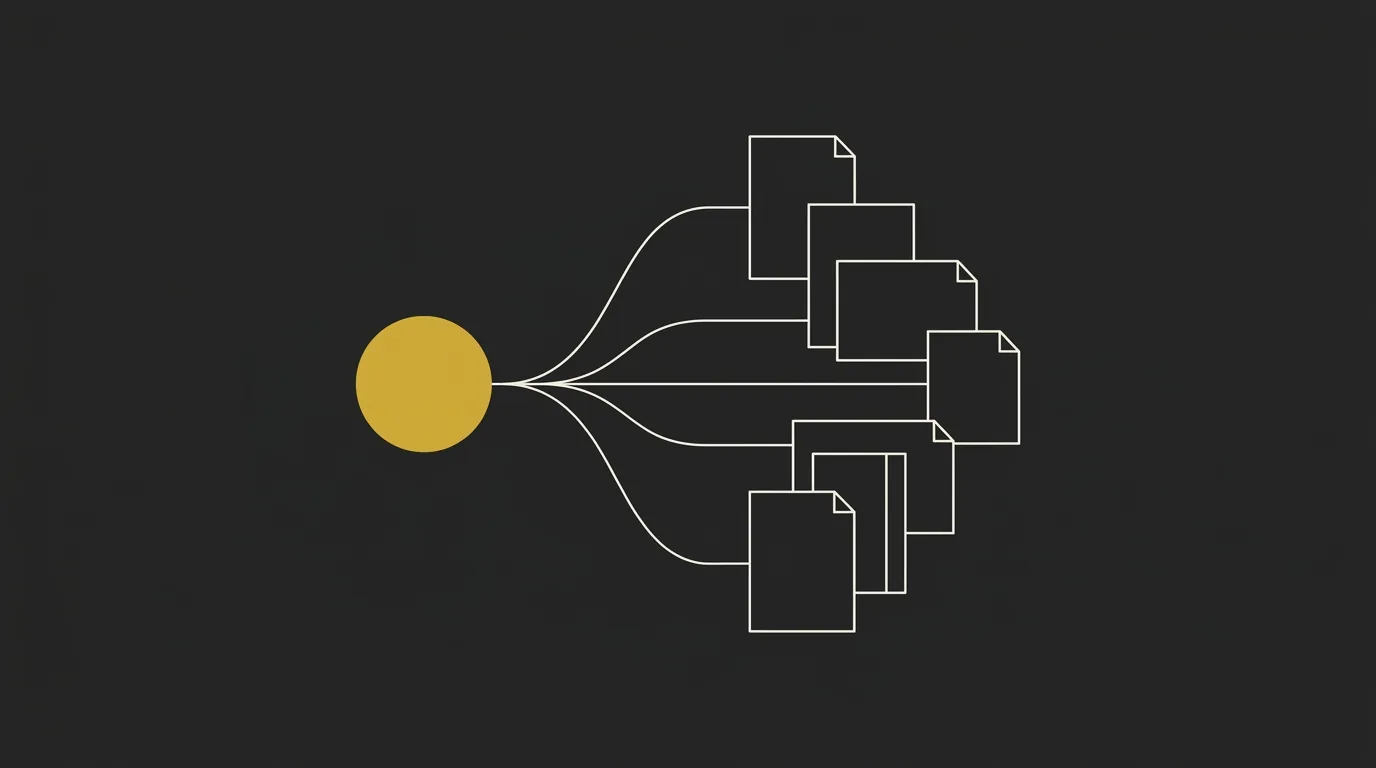
AI content sounds the same because stateless models have no memory of your brand, so they default to the statistical average of the open web they were trained on. Every team that sends similar prompts to similar models lands on the same voice, and that voice belongs to nobody.
So the model isn’t the weak link. The process is. Most teams generate AI-generated content in a single session with a topic and a few adjectives, and the tool fills every gap with whatever already exists online. Your competitors’ phrasing, regurgitated.
The fix is a dense brand context folder, built once and loaded before a single word gets generated: your voice rules, USPs, data, research, and story. Better prompts can’t replace it, because a prompt only describes what you want while the folder gives the model the material to write from. That is how the output stops being generic and starts sounding different from everyone else.
To apply this methodology to your brand, download our free brand folder creator.
The Real Cause: Stateless Models Grounded on the Open Web
Two things produce the sameness: models that hold no memory of your brand, and models trained on the same open web as everyone else’s. Each one alone would be manageable. Together they explain why a better prompt never fixes the problem.
Stateless models forget you between sessions
A stateless model carries nothing from one session to the next, so it starts every chat knowing nothing about your brand. The colours, the voice, the services, the pricing: all of it has to be re-briefed each time, and whatever you typed last Tuesday is gone.
That leaves you re-establishing your brand voice from scratch on every run, with no quality loop to improve on the last one. Nothing accumulates. And a model told nothing about you will invent a generic version of you, filling every gap with the safest guess available.
There is a sequencing trap on top of this. When the AI writes the first draft, no original voice exists to preserve, so any diagnosis afterwards compares the draft against nothing. Voice survives when a human draft comes first, or when the model can hold a substantial body of your prior work. A short prompt is not enough. Tools that work from a large corpus of an author’s earlier writing tend to match voice far better than tools fed a few lines of instruction.
Web-grounded generation pulls toward the average
Models are trained on the same internet, and what they do is predict the statistically likely next phrase. The likeliest phrasing for any topic is the shared average of everything already published on it. That average is where every one of the AI tools converges, whichever logo is on the interface.
So two competitors sending similar prompts to similar models get near-identical paragraphs back. Nothing about the model is broken. It is doing exactly what it was built to do, and without anything of yours to anchor it, AI-generated content lands in the middle of the crowd. Your tone is a different thing entirely from that middle, but the model cannot see it.
Why Brand Sameness Is Becoming the Defining AI Content Problem
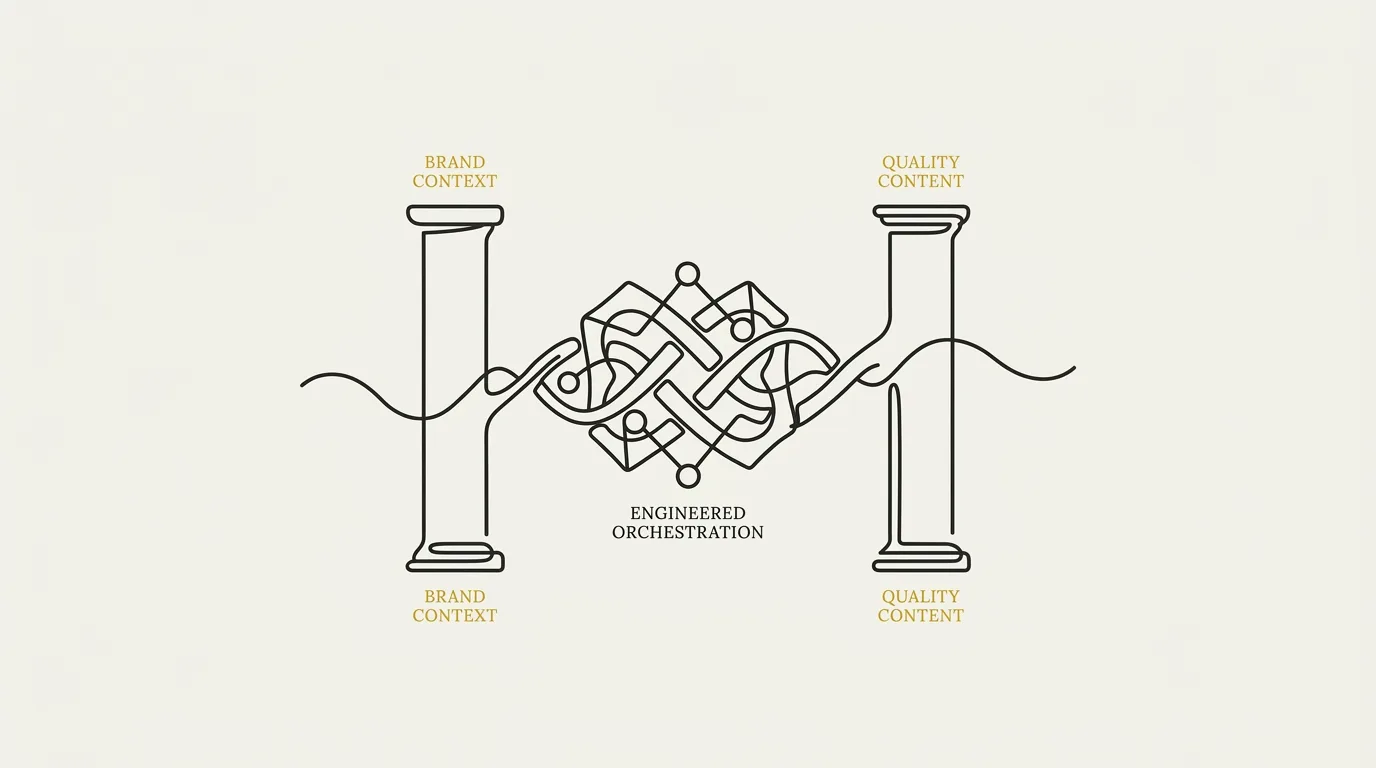
Sameness compounds. One generic post is forgettable, but a year of them rewrites how your audience sees you, and how your own team judges what good looks like. That makes it a business problem long before it shows up as a content problem.
Voice drift happens quietly over months
Drift is the slow slide away from how your brand actually sounds, and it moves fastest where speed is the goal. When an automated workflow publishes across channels with no human review, each AI draft becomes the baseline for the next one. Writers adjust to it, editors approve it, and nobody can point to the moment things changed.
The cost shows up as trust. Readers rarely complain that a post sounds off. They just stop feeling that a person with opinions is behind it, and that happens even when every fact on the page is plausible. By the time someone on the team asks what on-brand even means anymore, the brand voice has been replaced by the statistical average.
So the pattern is: a few phrases you would never say, a few reviews skipped for speed, and a year later you sound like everyone else. The mechanics behind this, and what stops it, are the subject of our piece on brand voice drift causes and fixes. What matters here is the stakes: drift is cumulative, and the longer it runs, the more expensive the repair.
Shared tools push competitors into one voice
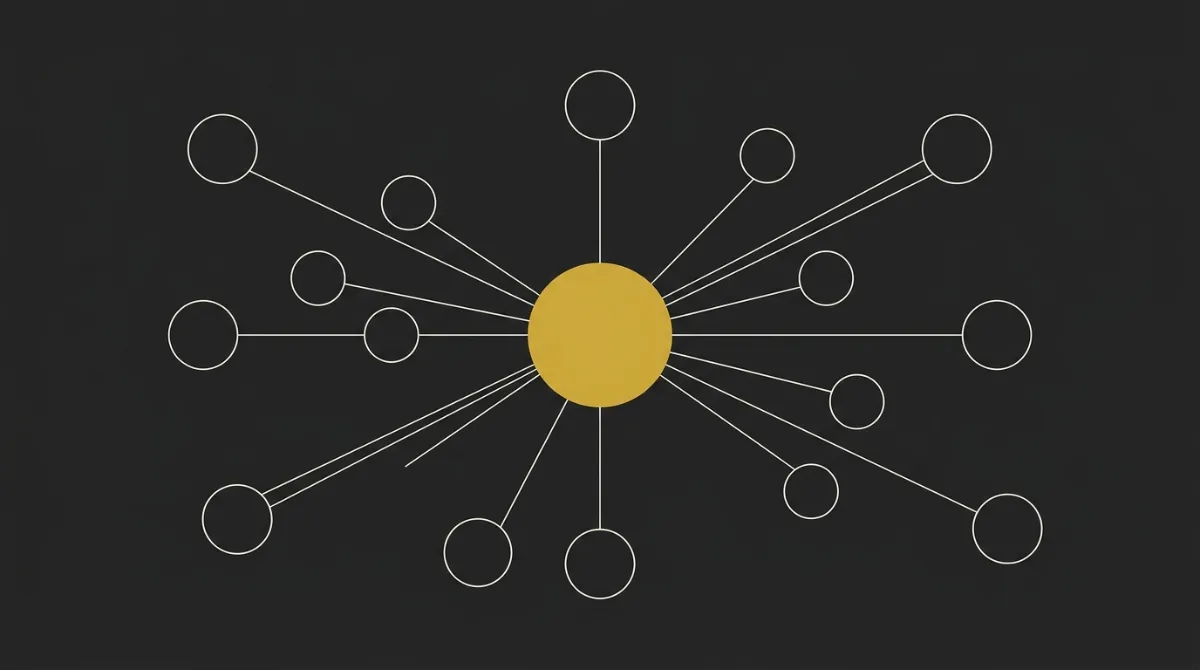
Every brand that uses the same tools with similar prompts converges on the same output. Keywords, research, draft, edit: the pipeline is identical, so the result is technically sound, instantly forgettable, and interchangeable with your competitors’ pages. Structure still earns rankings, but structure is the part everyone now has.
What separates one brand from another is the part a generic tool cannot supply: the data you have accumulated over years in business, the opinions you hold, the way your people actually write. Without those, AI-generated content stops being a competitive signal. Your page and a rival’s page say the same thing in the same register, and the reader has no reason to pick you.
That is why sameness is the defining problem and not a cosmetic one. Content creation is now cheap for everyone, so the only different thing you can publish is a point of view nobody else has. Custom grounding in your own voice and data is what keeps consistency from turning into uniformity.
The Fix: Build a Brand Context Folder Before You Generate Anything
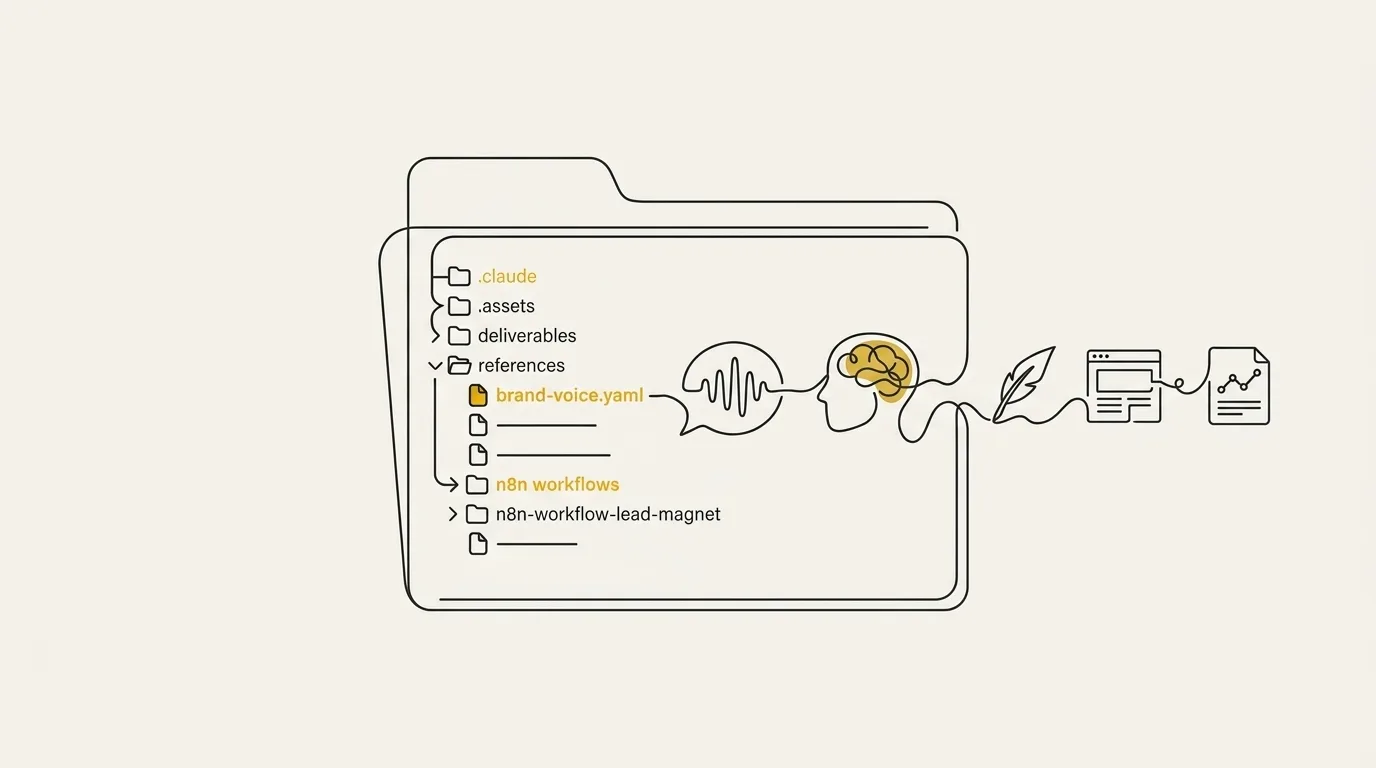
The fix is a standing brand foundation, built once and loaded on every run. A brand context folder holds your voice, offers, audience, and research as files the model reads before it writes anything. That is context engineering: you shape what the model knows, and the prompt stays short. It sits upstream of content creation, so every draft starts from your assets.
Build the folder first
Before any content project starts, gather tone of voice, USPs, offers, audience, research and marketing info into one dense brand context folder. Nothing gets generated until it exists.
Load it on every run
Attach the folder to each session so the model works from your assets instead of its training average. Ground the AI in the folder, not in a web search.
Reuse and refine
Update the same folder as you learn what works. Quality compounds across sessions instead of resetting each time.
Build the folder before the first prompt
Build the brand context folder as the first step of any project, before you write a single prompt. In my experience, this is the one rule worth keeping: no project or client onboarding starts without it. The folder sets the foundation for your marketing content, website copy and project structure.
A generic folder gives you generic output, so it needs real input from the people who know the brand. Gather that material first, then write. For the hands-on build, follow our guide, How to Use Claude for Branding With a Brand Context Folder.
Why a folder beats re-prompting every time
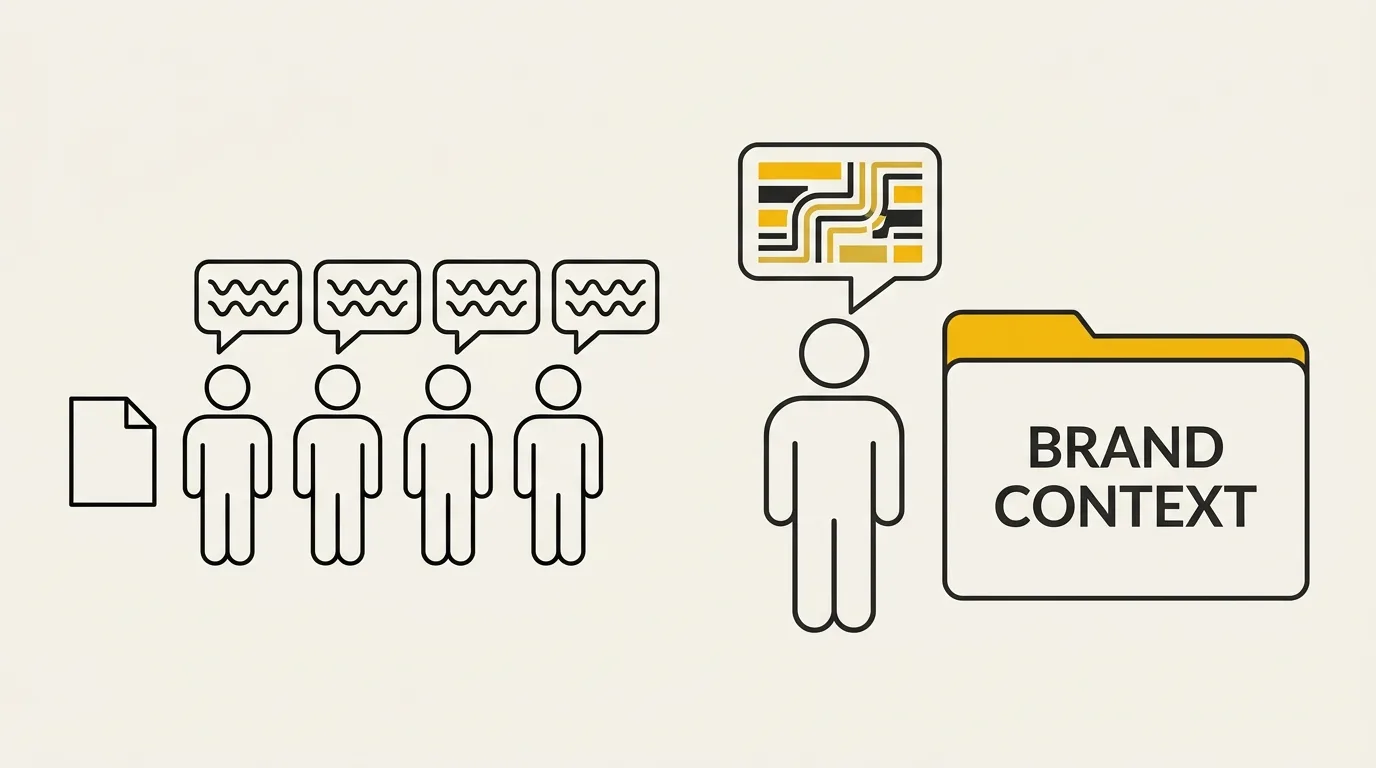
A persistent folder beats one-off prompts because the models start every session with no memory of you. A prompt makes the model summarize what already exists on the web, which is how every brand ends up sounding like its competitors. A folder carries your brand voice into every job, so the model has something different to work from.
It also changes the work you do. Re-prompting means re-briefing voice and pricing in every chat, while a folder is built once and attached each time. A top model can hold around 50 files of brand context in one session, so each job starts with the full picture.
What Actually Goes Inside the Brand Context Folder
A brand context folder holds four things: positioning and messaging, a documented brand voice, proof points, and the topics that are in or out of bounds. Each one removes a specific kind of generic output, so the table below pairs every component with the failure it prevents.
| Folder component | What it holds | What generic output it prevents |
|---|---|---|
| Positioning and messaging | ICP, offer, category, messaging pillars | Copy that tells a story any competitor could tell |
| Documented brand voice | Tone, natural phrasing, banned words, sample lines | The default register and stock AI vocabulary |
| Proof points | Wins, metrics, approved case study lines | Vague claims with nothing behind them |
| Topics in or out of bounds | Subjects you cover, angles you own, areas to skip | Off-brand tangents and filler subject matter |
The voice row carries the most weight in daily use. Words you use naturally sit next to words you ban, so the model has a pattern to copy and a list to avoid. For the longer version of this inventory, see what to include in a brand context folder.
Once these files exist, every round of content creation starts from your own material. Build them once, keep them as editable files, and the model reads the same foundation on every run.
Grounding the AI in Your Brand Folder
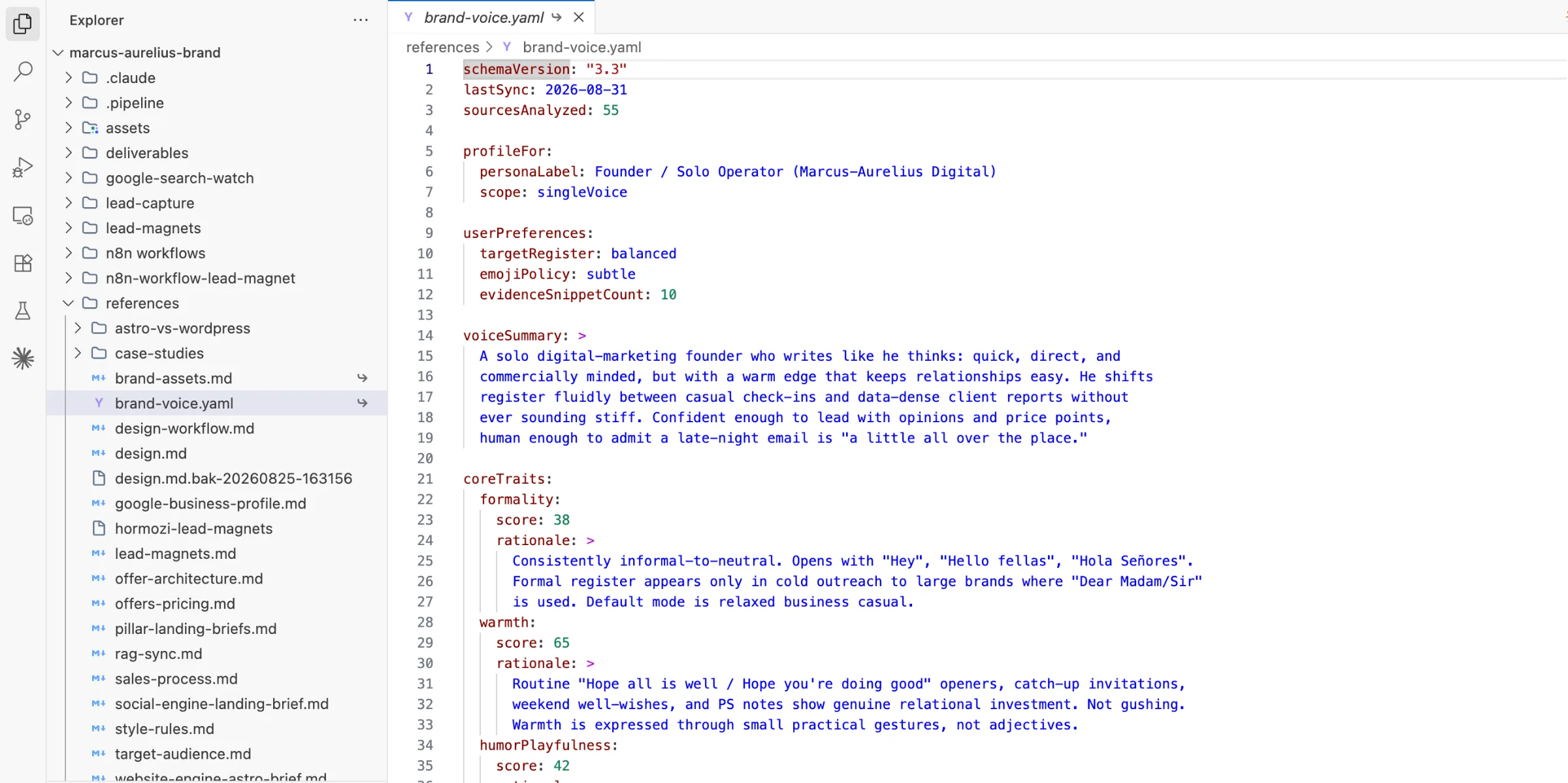
The folder is only half the fix. The second half is pointing the AI at it as the source of truth, so every generation draws on your brand assets and none of it on whatever the open web says about your topic. Without that instruction, a model with a full folder in reach still falls back on the average of what is published.
Depth matters here. A real corpus of prior brand work (past articles, approved copy, the way you actually explain your offer) matches your brand voice far better than a short prompt ever will, because the model has examples to imitate instead of adjectives to interpret. That is how consistency holds across channels, and it is also why keeping client brand voice without re-pasting guidelines every chat stops being a daily chore: the context is loaded once and read on every run.
Checklist to Stop Your AI Content Sounding Generic
Run this list before every piece goes out. Each item is a yes or no check, so you can see in seconds where the workflow leaks.
- Build your brand context folder before you generate anything, with positioning, voice rules, proof points, and topic boundaries in place.
- Point the AI at that folder as the single source of truth on every run, and reload it at the start of each new session.
- Name the asset, the audience, and the hex colors from your visual tokens in the prompt, so no gap is left for the average of the web to fill.
- Write the first draft yourself wherever brand voice carries the piece, such as opinion posts, founder notes, and key landing pages.
- Ask the AI for diagnostics that explain what is off and why, and keep the rewriting in your own hands.
- Cap correction density at a handful of high-impact flags per draft, so cosmetic smoothing never sands your phrasing down to something generic.
- Review voice, facts, and visual rules against the folder before the file leaves the session.
- Update the folder when positioning, voice, or proof changes, so consistency holds across months and the next output looks different from everyone else’s.
Eight items, one pass. If you can tick all eight, the draft in front of you sounds like your brand and nobody else’s.
Where to Take This Next
Sameness is a process problem, and a better prompt cannot fix it. The fix is a brand context folder that the AI reads as its source of truth before every run, so content creation draws on your voice, your proof and your positioning instead of the open web’s average.
Start where your setup is today. A solo marketer should build the folder first: one voice document and a short list of proof points will change the next draft you generate. A team should add one owner for the folder, so every writer loads the same files and the voice stays consistent as you scale.
Marcus-Aurelius Digital builds AI-orchestrated organic content systems on this same grounding method, and the same playbook has produced #2 Google rankings on two very different projects. If you want to see how that would work for your brand, get in touch for a sales call.
Frequently Asked Questions
Why does AI-generated content all sound the same?
AI-generated content sounds the same because models hold no memory of your brand and default to the average of the open web they were trained on. Teams sending similar prompts to similar tools get similar, middle-ground language back. The sameness comes from the process, and the model is only following it.
Can I just tell ChatGPT my brand voice in every prompt?
You can, and it helps, but it costs 5 to 10 minutes per prompt and the output still drifts. The model has no memory between sessions and no quality loop that checks the draft against your brand voice. A standing source of truth removes the retyping and the drift together.
Does using AI to write mean losing my brand voice?
No. Your brand voice stays intact when the model reads it before it writes, as a documented reference loaded on every run. Voice gets lost when a draft ships from a bare prompt and each approved draft becomes the new baseline. Documented voice rules and a review step keep consistency across every piece.
What is a brand context folder?
A brand context folder is a set of files holding your positioning, brand voice, proof points and topic boundaries, loaded by the AI before it writes anything. It differs from a one-off prompt because it is a reusable source of truth the model reads every time. That gives every piece of content creation the same starting point.
How is AI content homogenization different from plain generic writing?
Plain generic writing is one weak piece from one writer. Homogenization happens when many brands use the same tools with similar prompts, so their output converges on the same phrasing and your content ends up interchangeable with competitors’. The first is a quality problem you fix per piece, and the second needs a fix in the workflow.
Will readers actually notice if my content sounds generic?
Some will, and some will not. Plenty of readers value clarity and flow, so what feels generic to an expert can still perform for a newer audience. Over time, though, a stream of interchangeable posts blurs what your brand stands for, and experts tend to spot it first.